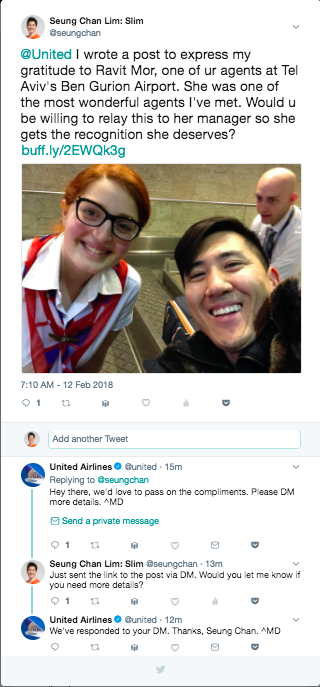
If someone’s life
looks perfect,
all it means
is we don’t know them
well enough.
Author: Seung Chan Lim
When our “good(s)” is(are) unappreciated.
Some of you replied to my last email asking how micro-managing can be good.
I’ll answer in a roundabout way.
My clients aspire to do good as leaders.
Good to employees, customers,…
It’s like wanting to be good parents.
Who can argue with that?
The irony is that trying to do good has not made an impact or made things worse.
This is one reason why realizing empathy is so critical.
We have an image of what “good” looks like.
But that’s what we think.
Doesn’t mean others will also appreciate the image as “good.”
I owe one of my most amazing growth experience to being micro-managed.
To be empathic is to be context-sensitive.
Our “good(s)” are unappreciated? We’ve misunderstood the context.
A Matter of When Not Whether
We often think micro-management entails meddling with every little detail from the moment we delegate work to another person.
Actually, there is another form of micro-management.
This is where we give someone the autonomy to do whatever they want, only to meddle with every little detail once they bring back the fruit of their autonomous labor.
The only difference here is when we micro-manage, not whether we micro-manage.
Between Fear and Care Arises Concern
With accumulated life experience arises fear.
Between fear and care arises concern and anxiety.
Our concerns are well-intended.
Yet, when we behave out of anxiety,
it can also do harm.
How many parents ever intend to hurt their child?
Very few.
Yet, we were hurt by them.
Often by behaviors that arose out of anxiety.
I have yet to coach a CEO who does not care about their co-founders or employees.
Yet, these others were hurt by the CEO.
Often by behaviors that arose out of anxiety.
Same holds for CEOs hurt by co-founders or employees.
Not caring isn’t always the issue.
The challenge is also to care without anxiety.
It is to regulate our own tension.
A difficult, but necessary skill to learn as a leader.
The Less We Trust…
The less we trust another person,
the more rules we wish to impose on them.
Strong Together
We say we want to be strong.
And by strong, we usually mean strong alone.
We can also be strong together.
And by being strong together,
I don’t mean helping others become strong alone.
Nor do I mean getting help so we can become strong alone.
I mean being strong by virtue of being together.
To be strong together is to be dependent, even for a moment.
Dependent is a dirty word with which nobody wants to be associated .
Yet, there are things we must depend on others to achieve.
Survival is one such thing.
Few things are more rewarding than knowing that we are needed.
Few things are more deadly than thinking we are not.
How Role Perception Blocks Our Appreciation
Perceiving people merely in their roles makes it easy for us to take them for granted in that moment.
You’re my mother, of course you cook for me.
You’re my child, of course you obey my orders.
You’re my employer, of course you pay me.
You’re my employee, of course you work hard for me.
You’re a doctor, of course you cure my ill.
You’re my patient, of course you do what I tell you.
The more we strip away the roles and see eye-to-eye, as human beings, the easier it is to appreciate each other.
The less appreciated we feel, the more resentment we let build in our relationship.
The more resentment we let build in our relationship, the more difficult it is to perceive beyond the roles.
Thus forms a vicious cycle.
To Be or Not To Be
I still remember the day I realized I was not living my own life.
I was shocked.
Why?
Because I prided myself on living my own life.
I had been intentionally deviating from what my friends were doing.
I thought I was living my own life.
But no.
It turns out I’d been conforming to nonconformity.
I’d been playing the role of a “rebel.”
Much of our lives are spent playing roles: a good son, a caring parent, a resilient entrepreneur, a modernist painter, a stoic physician, …
As we do, we mistake pretending for being ourselves.
Actually. No.
We mistake pretending for being.
Hamlet once said “To be or not to be, that is the question.”
Let us ask this question.
Lest we die having never lived.
Choose to Relieve Your Tension
Some of our tensions
come from sitting around
hunched over
a computer screen.
Go running.
Do a few burpees.
Stand up
and write on the whiteboard.
If you’re breathing shallow,
breathe from your belly.
Stand tall,
look up at the ceiling for a few seconds
and smile.
Submerge your face
in ice-cold water for a few seconds,
a few times.
For a period of time,
walk around
holding a frozen water bottle in your hand.
Receive emotional support.
Get the help of a professional.
Whatever you do,
may we remember
there exists the option
to choose to take the first step
to relieving our tension.
Whether we do it ourselves
or ask for the help of others,
may we make the choice.
Now.
Micro-Innovation by Ravit, a Check-in Agent at United Airlines
I’m writing to express my gratitude to Ravit at the United check-in counter inside Tel Aviv, Israel‘s Ben Gurion Airport.
I hope Ravit gets the recognition she deserves. I can’t remember the last time I met a check-in agent so vivacious and, dare I say, fun to interact with.
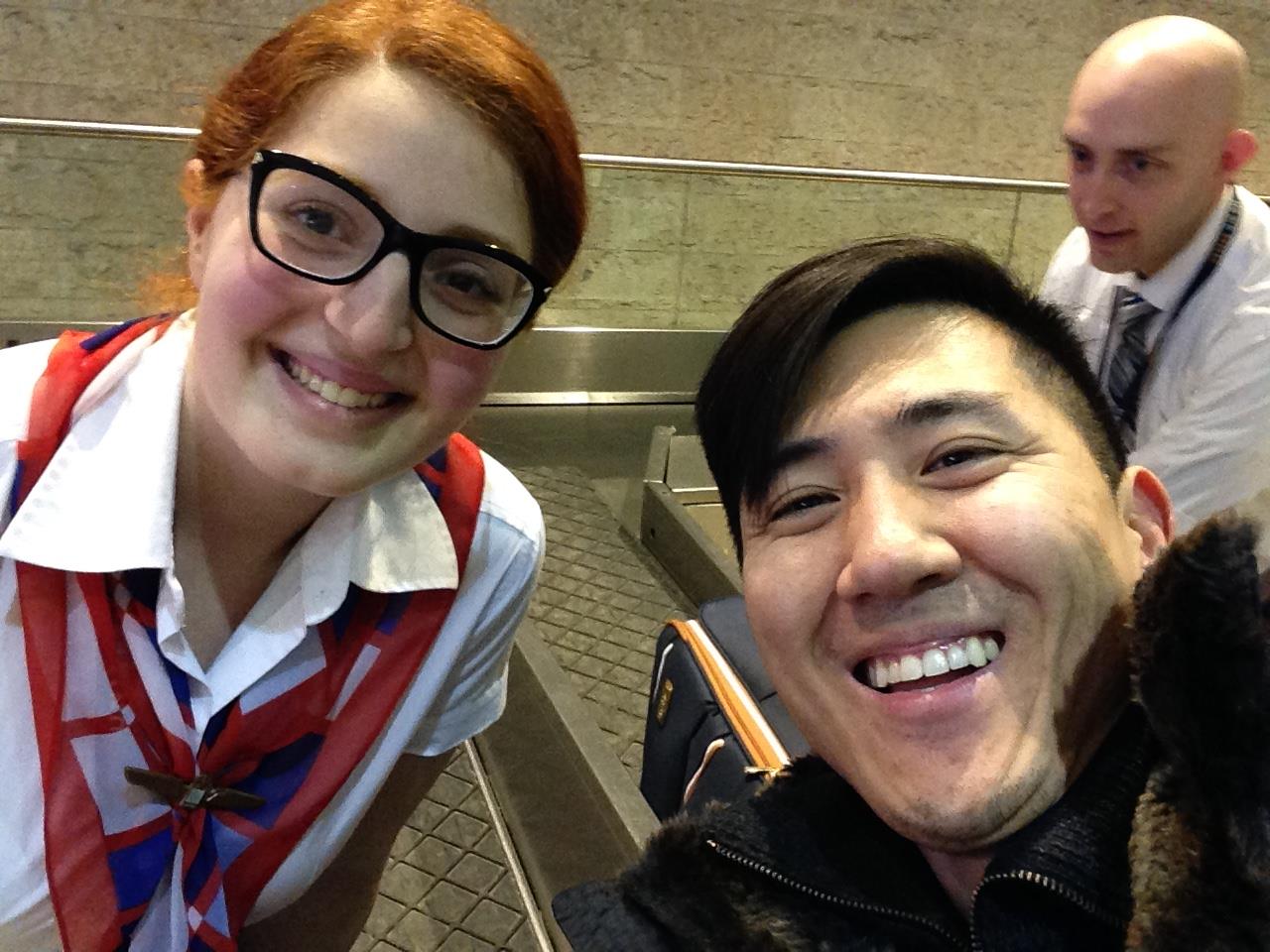
While my trip to Israel had been inspiring, I was tired nonetheless. I could not wait to get back home. Until I encountered Ravit, my energy was low. I was also grumpy that I could not check in at the kiosk just because I wanted to check a bag. From the first interaction, Ravit joked with me in a tone so playful and warm that I could not help, but laugh along. Her presence was like an oasis to an otherwise dried-up state of mind. So much so that I was grateful that I did not check in at the kiosk. I felt restored and refreshed after our interaction. I cannot tell you how much I appreciated that.
Facing people as an agent at the check-in counter while being true to a personality so vivacious and playful is not an easy thing to do. Especially when everyone else in the airport seems so serious and stern (This is not a criticism. I know it is well warranted given how serious the security situation is in Israel). Not only that, but given the kinds of struggles many people experience at the airport, I wouldn’t be surprised if she has experienced people who respond to her energy in negative ways. All this means it would have been much safer for Ravit to express no emotions and instead focus on getting her task done. But no, Ravit was willing to be vulnerable enough to be herself and treat me as a human being, not merely a task to be completed.
Thank you Ravit for your willingness to bring brightness and positivity to a world that is often biased toward darkness and negativity. I consider your actions a good example of the kind of micro-innovation I hope to see more in the world. May you continue to bring joy to the lives of people with whom you come in contact.
UPDATE: