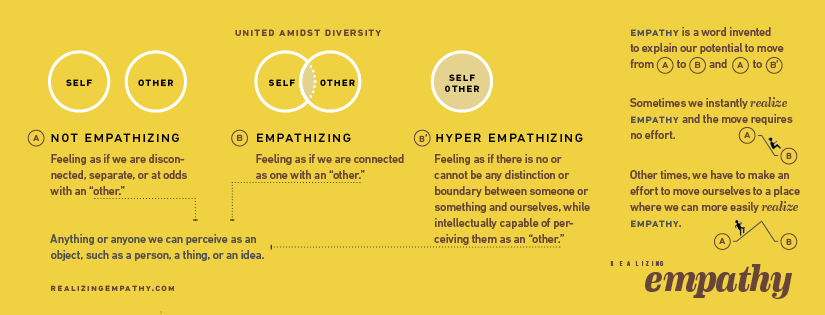
Sometimes
telling someone to calm down
is like telling someone who has to pee
to hold it in.
Other times
telling someone to calm down
is like telling someone who is already peeing
to hold it in.
What if Irony is Judging Others for Lacking Empathy?
Sometimes
telling someone to calm down
is like telling someone who has to pee
to hold it in.
Other times
telling someone to calm down
is like telling someone who is already peeing
to hold it in.
Making mistakes
is often times the only way
to learn.
you are able to achieve
without learning
but when what you didnt learn
because you were busy achieving
becomes relevant
unless you know what to look for
you will make the mistake and learn from it
Think of the “self”
as possibilities.
What will arise in the moment
as “self”
may be contingent upon
numerous variables
not the least of which
is our judgment
of what is right
vs
wrong.
We sometimes say
we partnered up
because our partner’s skills
complemented
our own,
when what we really mean
is that we were afraid
that without our partner’s skills
we would
fail.
When we hyper-empathize
we can conflate
what is in our own best interest
with what is in the best interest
of the other
with which
we hyper-empathize.
That other
maybe our company,
our children,
or any number
of “others.”
When our team
have something they want to do
and we tell them
not to do it,
we may feel satisfied
seeing them
stop.
…
What we may not realize
is that they may be doing it
behind our back.
I thought I wanted
to sing.
What I really wanted
was permission
to feel.
I thought I wanted
to act.
What I really wanted
was permission
to be real.
I thought I wanted
to make furniture.
What I really wanted
was permission
to play.
If resentment says
“I will have
the last laugh.”
Regret may say
“I wish I could have
laughed about it
then.”
Realizing empathy
often helps us see
that what we judged
as selfish
can be mutually beneficial
and what we judged
as altruistic
can be hurtful.
Recovery
is what fuels growth
not
hard work.
Hard work
is necessary
but insufficient.